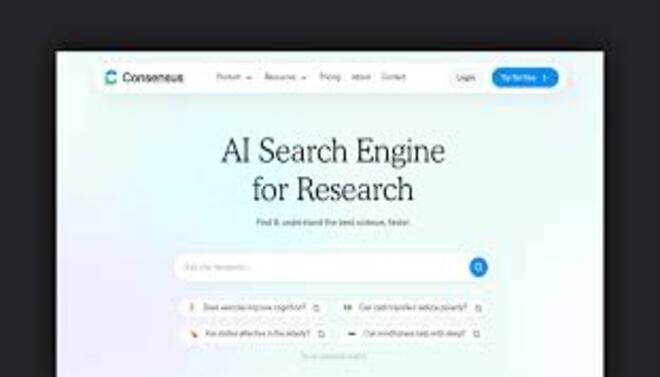
Consensus is a specialized AI-powered search engine designed to provide evidence-based answers by querying a database of over 200 million peer-reviewed scientific papers.
Introduction
Consensus is a specialized AI-powered search engine designed to provide evidence-based answers by querying a database of over 200 million peer-reviewed scientific papers. Unlike general-purpose AI models that can hallucinate, Consensus is strictly grounded in published research.
When a user asks a question, the platform uses natural language processing to find relevant studies, synthesize the findings, and provide a direct answer backed by citations.
Its mission is to democratize access to scientific knowledge, making it easy for students, researchers, and health enthusiasts to bypass the jargon of academia and find the “consensus” of the scientific community on any given topic.
Peer-Reviewed Only
Consensus Meter
AI Copilot
Study Snapshots
Search Grounding
Review
Consensus is known or its unrivaled focus on scientific integrity. Its primary strength is the Consensus Meter, which visually represents the prevailing opinion of the scientific community on “Yes/No” questions, significantly reducing the risk of confirmation bias.
The integration of GPT-4 powered synthesis with peer-reviewed citations ensures that users get the speed of AI with the reliability of a lab report. While the most powerful synthesis features require a subscription and it focuses strictly on academia rather than the live web, it is the definitive tool for anyone requiring high-stakes, verifiable information.
Features
Consensus Meter
For "Yes/No" questions, the AI analyzes the top results and tells you what percentage say "Yes," "No," or "Possibly."
Synthesis (Copilot)
A high-level summary that appears at the top of the search, weaving together findings from the top 10-20 most relevant papers.
Study Type Labels
Automatically tags papers as "RCT," "Meta-Analysis," or "Review" so you can judge the level of evidence.
Human-Friendly Snippets
Pulls the most relevant "one-sentence conclusion" from a paper so you don't have to read the full abstract.
Citation Export
Seamlessly export citations in APA, MLA, Chicago, or BibTeX formats for easy academic referencing.
Journal Impact Filter
Allows users to prioritize results from high-impact, prestigious scientific journals.
Best Suited for
Medical Professionals
Ideal for finding the latest evidence on treatments, supplements, and clinical outcomes.
University Students
Perfect for conducting literature reviews and finding cited sources for essays and theses.
Science Educators
Excellent for demonstrating the scientific method and showing students how "consensus" is formed.
Content Creators
Great for verifying facts before publishing educational or scientific videos/articles.
Health & Wellness Enthusiasts
Useful for cutting through marketing hype to find what science actually says about diets or exercises.
Policy Makers
A strong tool for backing up legislative decisions with objective, peer-reviewed data.
Strengths
Virtually eliminates hallucinations by grounding every AI-generated claim in a cited, peer-reviewed paper.
The “Consensus Meter” provides instant clarity
Synthesis saves hours of reading
Transparent citations allow users to click any AI claim and see exactly which study it came from.
Weakness
Academic Focus Only; it won’t give you answers on current events
Small Samples
Getting started with: step by step guide
The Consensus workflow is designed to move from a curious question to a verified scientific conclusion.
Step 1: Ask a Question
The user types a question into the search bar (e.g., “Does creatine help with brain function?”).
Step 2: Review Synthesis
The AI Copilot generates a 2-3 paragraph summary of the top research at the top of the page.
Step 3: Check the Meter
The user looks at the Consensus Meter to see if the scientific community generally agrees or if the data is mixed.
Step 4: Analyze Individual Studies
The user scrolls through the individual papers, checking the “Study Snapshot” for sample sizes and types.
Step 5: Filter for Quality
If there are too many results, the user filters for “Meta-analysis” or “Highly Cited” papers to find the best evidence.
Step 6: Save & Cite
The user bookmarks the relevant papers and copies the citations into their research document.
Frequently Asked Questions
Q: Is Consensus a chatbot like ChatGPT?
A: No. It is a search engine. It uses AI to find and summarize real research papers, not to generate creative text from its own training data.
Q: Are the answers 100% accurate?
A: The AI summarizes what the papers say. If the papers are accurate, the answer is accurate. You should always check the citations provided.
Q: Can I use it for free?
A: Yes, you can search for free. However, the Synthesis and Consensus Meter features have limited credits for free users.
Q: Does it include medical advice?
A: No. It provides scientific data. You should always consult a doctor before making medical decisions based on research.
Q: Where does the data come from?
A: It pulls from the Semantic Scholar database, which includes over 200 million peer-reviewed papers from all major scientific fields.
Q: Can it search for news articles or blogs?
A: No. It only searches peer-reviewed academic journals to ensure the highest level of evidence.
Q: Does it work for non-science topics like history?
A: Yes, as long as there is academic research on the topic, Consensus can find and synthesize it.
Q: Can I upload my own PDFs?
A: This is primarily a search engine for existing research, though competitors like Elicit offer more PDF-upload features.
Q: How does it handle conflicting studies?
A: The AI is designed to identify conflict. If 5 papers say “Yes” and 5 say “No,” the Consensus Meter will reflect that the evidence is “Mixed.”
Pricing
Consensus operates on a freemium model. While basic searching is free, the advanced AI synthesis, “Consensus Meter,” and GPT-4 powered “Copilot” features are unlocked through a tiered subscription.
Basic
$0/month
Limited AI credits, basic filtering, citation management.
Standard
$10/month
Consensus Meter, GPT-4 Synthesis, unlimited bookmarks, study quality filters.
Pro
$45/month
Team collaboration, custom admin controls, API access, SOC2 compliance.
Alternatives
Elicit.org
A direct competitor focused on literature reviews and extracting data from PDFs for researchers.
Semantic Scholar
An AI-driven research tool from the Allen Institute; excellent for discovery but lacks the "Consensus Meter" synthesis.
Google Scholar
The industry giant; powerful for finding papers but lacks AI summarization and evidence synthesis features.
Share it on social media:

Consensus
Sale Ends In: