
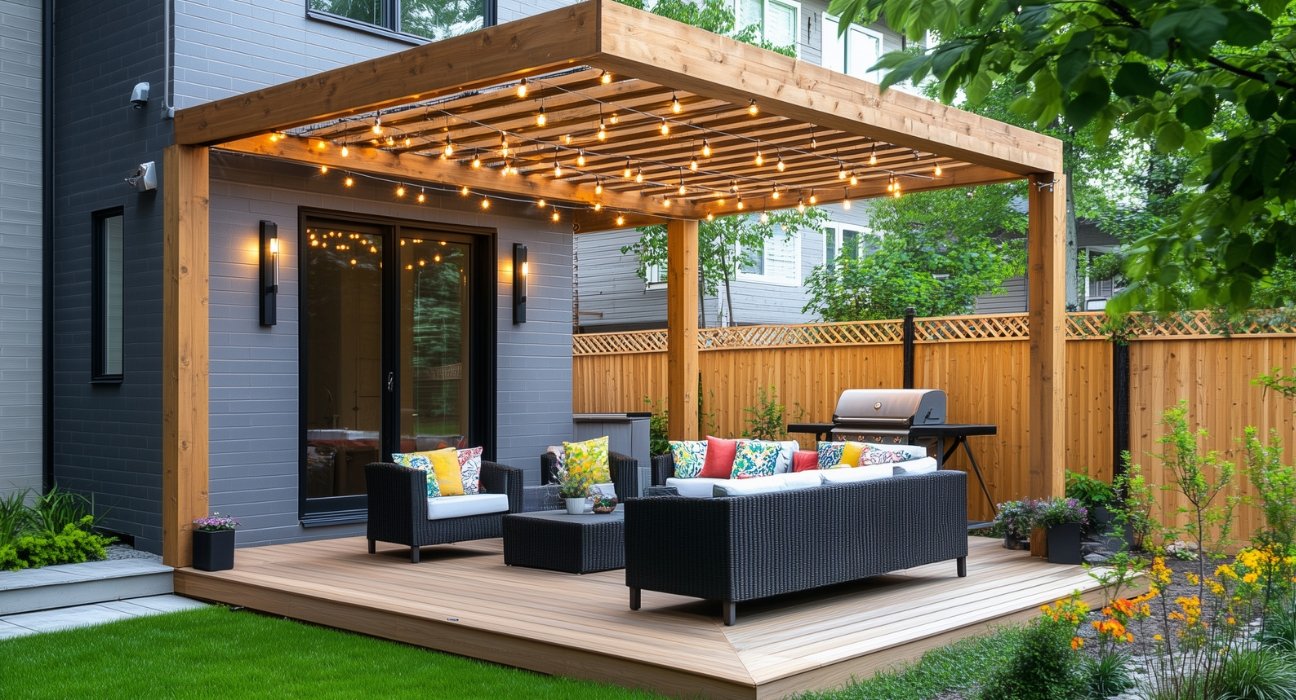
A business patio has to earn its keep. Every chair and table should support service and be simple to clean and reset between guests.
Start with what the patio has to do
Purpose decides almost everything about furniture for a patio. A staff break area has different needs from full dining service, while short-stay seating near an entry needs another approach. Evening drinks call for a different setup again. Naming the job first makes size and type easier to pick.
Staff breaks need shade and small tables for lunch bags and phones. Seats should wipe clean quickly and take daily use through warm months. Dining service needs more stability and elbow room, with level tables and chairs that slide without dragging or wobbling.
Waiting spots turn over fast. People sit briefly with bags at their feet, so lounge chairs with low tables work well there. Evening drinks favor taller tables where guests can stand or perch. A mix of perching and lounging keeps the space active without crowding service.
Before shopping, measure the usable space. Mark doors and service paths with tape, noting planters and posts that take up floor area. Leave room for staff carrying trays. Bring a table outside for a lunch rush and see where lines form and chairs drift. Watch how sun moves across the slab by midafternoon. One busy day can tell you more than a catalog floor plan.
Keep those taped measurements handy.
Why business use calls for a different spec
A set that works well at home may not suit a busy business patio. Repeated use, frequent cleaning and daily rearranging can place different demands on it. Start by checking the manufacturer’s intended use and warranty terms rather than judging durability from the style or price. Confirm that the warranty covers your business setting.
Treat the label “commercial-grade” as a starting point for questions, not a complete specification. Ask for construction details, load limits and any applicable test documentation. Inspect joints and fasteners on a sample, and find out whether replacement parts are available. A sturdy-looking frame is not enough if a worn foot or damaged seat cannot be replaced.
Cleaning compatibility deserves its own check. Outdoor suitability does not mean a finish will tolerate every detergent or disinfectant. Give the supplier the names of your cleaning products and request written care instructions for the frame, tabletop and cushions. Keep those instructions where managers can find them.
Match the specification to your workload. A sheltered office break area may need a different setup from a restaurant that resets tables several times a day. Have staff lift, move and clean a sample before committing to the full order. If handling it is awkward or its care routine is unrealistic, compare another option. The aim is furniture your team can maintain consistently, not simply the heaviest frame or the most expensive finish.
Pick materials for your climate and cleaning routine
Material choice is mostly about weather and upkeep. Sun breaks down color and surfaces over time, while rain and humidity test joints and hardware. Wind finds weak spots. Pick for your site first and style second. No material wins in every setting.
Powder-coated aluminum and other metals
Powder-coated aluminum is a common outdoor option because it is relatively lightweight and resistant to rust. Check the actual chair’s weight and stacking instructions; frame material alone does not tell you how easy it is to handle. In coastal air, ask about the coating system and hardware, since salt can attack chips and screws. Rinse frames per supplier guidance and touch up chips early. Steel works too, but is heavier to move and needs sound coating to keep rust at bay.
Teak and plastic lumber
Teak hardwood is naturally dense and oily, helping it resist water and insects better than softer woods. It turns gray outside if left alone. Some businesses like that silver look; others wash and oil per supplier guidance to keep the tone. Either way, plan regular care and explain the routine to staff. HDPE plastic lumber is another option where moisture resistance is a priority. Check the exact product’s outdoor-use specification and follow its cleaning instructions. Regular washing still matters because dust and pollen leave a film. Check the spec for UV stabilizers and use covers when the patio sits idle.
Wicker and fabrics
Woven resin wicker looks soft and inviting in lounge corners. Sun can fade and dry out low-grade weaves, with frizz and cracks appearing after long exposure. Look for business-use wicker with UV stabilizers listed in the spec. Follow cleaning guidance and bring cushions inside during storms. For cushions and umbrellas, ask about the exact fabric’s outdoor-use rating, fade resistance and cleaning instructions. Solution-dyed acrylic is one option to compare, but seams, cushion construction and care requirements also matter. For inspiration when planning an outdoor business area, these commercial patio furniture ideas cover fall setups. Use that guidance to short-list frames and fabrics that match your weather.
Get heights and mix right for how people stay
Dining-height tables anchor meal service. Chairs at that height let most guests sit with feet flat and elbows at ease. Test the pair before buying, sitting for ten minutes to see whether the edge presses your legs. Check that tables don’t rock when guests lean in.
Bar-height tables suit drinks and short stays. Stools tuck under to free floor space, and the tables give standing guests somewhere to set glasses. Keep a foot rail or rung for comfort. Check that stools don’t tip when guests twist to talk. Swivel models should return smoothly and sit flat on the slab.
Lounge sofas suit coffee and dessert. Low seats invite guests to settle in, with small side tables nearby for cups. Don’t block server paths with deep frames. Leave room behind for trays to pass.
Place dining sets where servers have clear routes. Bar-height seating may suit a drinks area, but check placement near railings or edges with your site safety reviewer. Lounge seating can fit quieter corners when deep frames do not obstruct circulation. Include dining-height options rather than relying solely on tall tables. Bring samples out and run a mock service. You’ll feel which height slows service and which keeps guests comfortable.
Plan layout for movement and access
Good layout starts on paper and ends with tape on concrete. Draw the patio to scale, cut out table shapes and move them until servers have clear runs. Then tape a few spots and walk them with a loaded tray. It’s slow work, but saves costly swaps later.
Leave clear paths for everyone. Guests with strollers and wheelchairs need smooth, straight routes, as do staff carrying trays. Check local accessibility and building rules early. Moving tape is cheaper than moving bolted tables. Keep exits and gates clear at all times.
Give each seat room to pull out and stand. Tables should not sit so close that chairs hit planters or rails. Test with the largest chairs you own. If backs touch when guests stand, allow more space. Leave room for high chairs and carts if you serve families.
Watch umbrella clearance too. Canopies should clear heads and lights, with bases out of walkways so no one trips. Train staff to close canopies when wind rises and reset bases each morning per supplier steps. Adding one more table is tempting. Resist it during peak planning. Enough room lets staff carry trays without squeezing behind occupied chairs and gives guests space to sit and stand. Judge capacity by a realistic service test, not by how many empty tables fit.
Test for wind, weight and daily handling
Wind deserves particular attention on open patios. Pick umbrella bases rated by the supplier for your canopy size, and follow guidance for filling and tightening. Don’t trust weight alone to keep things safe. Set a clear rule for closing and securing umbrellas. Practice before a storm hits, not during one.
Tables need steady feet on your actual surface. If levelers are available, test how they adjust and whether they stay secure. Check that stools sit flat and that any swivel mechanism operates as intended. Try normal sitting, turning and getting up on a sample without deliberately tipping it. Report instability to the supplier before buying.
Daily handling decides what survives. Lift a chair as your staff will, then stack it and carry it to storage. If it drags or pinches, keep shopping. A handling test tells you more than spec sheets for this decision. Your crew will appreciate it on the tenth reset of a hot night.
Choose pieces compatible with the cleaners you already use. Ask the supplier which products are safe for each finish. Buy cushions with removable covers to wash and swap. Order extra glides and feet upfront so a small part does not sideline a table. A missing foot can leave an otherwise usable table out of service.
Buy for total cost and timing, not sticker price
Sticker price tells only part of the story. A low-cost set needing frequent fixes eats labor hours and pulls tables out of service on busy nights. A higher-priced option may justify its cost if it offers suitable construction, manageable care and better repair support. Include labor and downtime when comparing costs. Count disposal runs and reorder hassle too.
Include storage and covers in the math. Check the permitted stacking height and any protective spacers needed between chairs. Measure the stored stack as well as the set in use; a tall stack may not fit through your shed door. Follow cover instructions too, including ventilation and any need to dry furniture before covering it.
Work backward from the date the patio needs to open, leaving room for delivery, inspection and setup. Ask each supplier for a current availability estimate and clarify whether it covers dispatch or arrival. Bring measurements and photos to the first call so quotes include the right configuration. Confirm how replacement parts are ordered and what happens if a shipment is damaged or delayed.
Keep a small spares kit on hand. Feet and glides wear first. A spare cover saves a cushion after a rough spill. Write down who to call when a weld cracks or a strap snaps. That page in the office binder keeps small faults from closing whole sections.
Choose for purpose and weather, then test handling and flow. The right furniture helps staff serve comfortably and guests settle in. That is what makes the space outside work for the business.