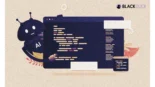
Black Duck Signal is a cutting-edge agentic AI application security solution specifically engineered to secure code generated by AI assistants and autonomous workflows.
Introduction
AI is no longer just accelerating development—it is actively writing the world’s software. But as AI “agents” begin to push hundreds of changes per hour, traditional security tools are collapsing under the weight of the code. Black Duck Signal was built to solve this new-age crisis by meeting AI with AI. By grounding its specialized agents in ContextAI™—a database of petabytes of real-world security truth—Signal provides the “intelligence and determinism” that general-purpose AI lacks. It doesn’t just look for patterns; it understands the deep data flows and business logic of an application to stop high-impact flaws, such as the authentication bypasses it famously discovered in Gitea. In a world of “AI slop” and rapid-fire commits, Signal is the essential guardian for the modern, agentic software development life cycle.
Agentic AI Architecture
ContextAI™ Powered
MCP-Ready
2026 SC Award Winner
Review
Black Duck Signal is a cutting-edge agentic AI application security solution specifically engineered to secure code generated by AI assistants and autonomous workflows. Launched in March 2026, it addresses the “security gap” created as AI moves from just helping developers to actively authoring software. Unlike traditional rule-based scanners that struggle with the volume and logic flaws of synthetic code, Signal utilizes a coordinated system of specialized AI security agents that can reason, validate, and act with human-like logic.
The platform’s core strength lies in ContextAI™, a proprietary model trained on over 20 years of human-validated security intelligence. This allows Signal to filter out the high “noise” of traditional AST (Application Security Testing) tools and focus only on genuine, exploitable risks. With its ability to integrate directly into IDEs via the Model Context Protocol (MCP), Signal acts as a real-time “security partner” for AI coding assistants, often fixing vulnerabilities before they ever reach a commit. For enterprises scaling AI-driven development, it provides the deterministic governance needed to move fast without compromising trust.
Features
Agentic AI Security Agents
A fleet of specialized AI agents that collaborate to analyze vulnerabilities, assess exploitability, and recommend remediation.
ContextAI™ Grounding
Leverages 20+ years of battle-tested security data from thousands of real-world codebases to eliminate hallucinations and noise.
Real-Time IDE Integration
Connects directly to AI coding assistants and IDEs (via MCP/APIs) to identify and fix defects as code is being generated.
Exploitability Analysis
Intelligently filters out "non-issues" and theoretical flaws, surfacing only the risks that can genuinely be exploited in production.
Logic Flaw Detection
Goes beyond simple text matching to identify complex business logic errors and vulnerabilities in languages not supported by traditional AST tools.
Automated Remediation
Works with AI coding assistants to automatically apply fixes with little to no developer effort required.
Best Suited for
DevSecOps Teams
Managing high-velocity AI-generated codebases that overwhelm traditional periodic scanning models.
Enterprise Software Leaders
Implementing responsible AI governance to ensure trust and compliance in autonomous development.
Security Researchers
Using "human-like reasoning" agents to surface zero-day vulnerabilities and high-impact logic flaws.
Regulated Industries (Finance/Healthcare)
Requiring uncompromised trust in software provenance and license compliance.
Cloud-Native Developers
Securing modern architectures and frameworks that evolve too fast for standard rule-based updates.
Software Supply Chain Architects
Managing transitive risks and transitive dependencies in massive volumes of third-party code.
Strengths
Deterministic Security
Drastic Noise Reduction
Language & Framework Agnostic
Seamless Developer UX
Weakness
New Product Maturity
Complex Setup (On-Prem)
Getting Started with Black Duck Signal: Step-by-Step Guide
Step 1: Access the Signal Portal
Visit the Black Duck website to request a demo or trial. Signal is generally available as a cloud-native or hybrid solution.
Step 2: Authenticate via MCP
Enable the Model Context Protocol (MCP) in your IDE or AI coding assistant. This allows Signal agents to communicate directly with your coding environment.
Step 3: Initialize ContextAI™
Signal will begin “learning” your application’s specific context, its data flows, frameworks, and architecture, to ground its security decisions.
Step 4: Real-Time Monitoring
As you generate code with AI, watch for Signal’s real-time alerts. High-confidence vulnerabilities will appear with “safe refactor” suggestions.
Step 5: Automated Remediation
Click “Apply Fix” to let Signal work with your coding assistant to rewrite the code safely. Review the detailed audit report for governance and compliance records.
Frequently Asked Questions
Q: Is Signal a separate tool from Black Duck SCA?
A: Yes. While SCA focuses on third-party open-source risk, Signal is an agentic AI solution specifically for securing AI-generated and first-party code.
Q: What is "ContextAI"?
A: It is Black Duck’s purpose-built AI model trained on petabytes of real-world security data, used to ground the agents so they don’t hallucinate non-existent threats.
Q: Does it support my coding assistant (e.g., GitHub Copilot)?
A: Yes. Signal integrates via MCP and APIs to support all major AI coding assistants, IDEs, and automated pipelines.
Pricing
Black Duck Software pricing is typically customized based on developer count and product selection. Signal is often bundled as part of a broader AppSec platform.
| Plan Tier | Estimated Yearly Cost | Target |
| Small Team (10-50 dev) | $50,000 – $75,000 | Includes core static analysis and basic AI signals. |
| Mid-Market (50-150 dev) | $75,000 – $150,000 | Full Signal AI suite + Polaris Platform reporting. |
| Enterprise (150+ dev) | $300,000 – $600,000+ | Global scale, Agentic AI MDR, and dedicated success resources. |
Alternatives
Checkmarx One Assist
A powerful agentic rival that also offers in-IDE security agents and automated remediation for AI-generated code.
Snyk AppSec
A developer-favorite tool known for its massive vulnerability database and ease of integration into CI/CD pipelines.
CrowdStrike Falcon (Blueprint)
Best for organizations looking for unified cloud, endpoint, and agentic AI protection under one "blueprint."
Share it on social media:
Questions and answers of the customers
There are no questions yet. Be the first to ask a question about this product.