
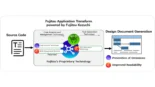
Fujitsu Application Transform is a specialized generative AI service designed to solve the “black box” problem of legacy enterprise systems.
Introduction
For decades, the world’s most critical infrastructure—banks, governments, and manufacturers—has run on “zombie” code: systems so old and complex that the original designers have long since retired. Fujitsu Application Transform is the 2026 surgical strike against this technical debt. By leveraging proprietary Kozuchi AI, Fujitsu has effectively created a digital archaeologist that can read millions of lines of COBOL and tell you exactly how your business logic works in plain language. This isn’t just an incremental tool; it’s a fundamental shift in software engineering that moves us away from labor-intensive manual audits toward a model where AI takes on the heavy lifting of understanding, documenting, and eventually rebuilding the world’s digital foundations.
97% Time Reduction
Knowledge Graph-Enhanced RAG
COBOL-to-Design Automation
2026 SaaS Launch
Review
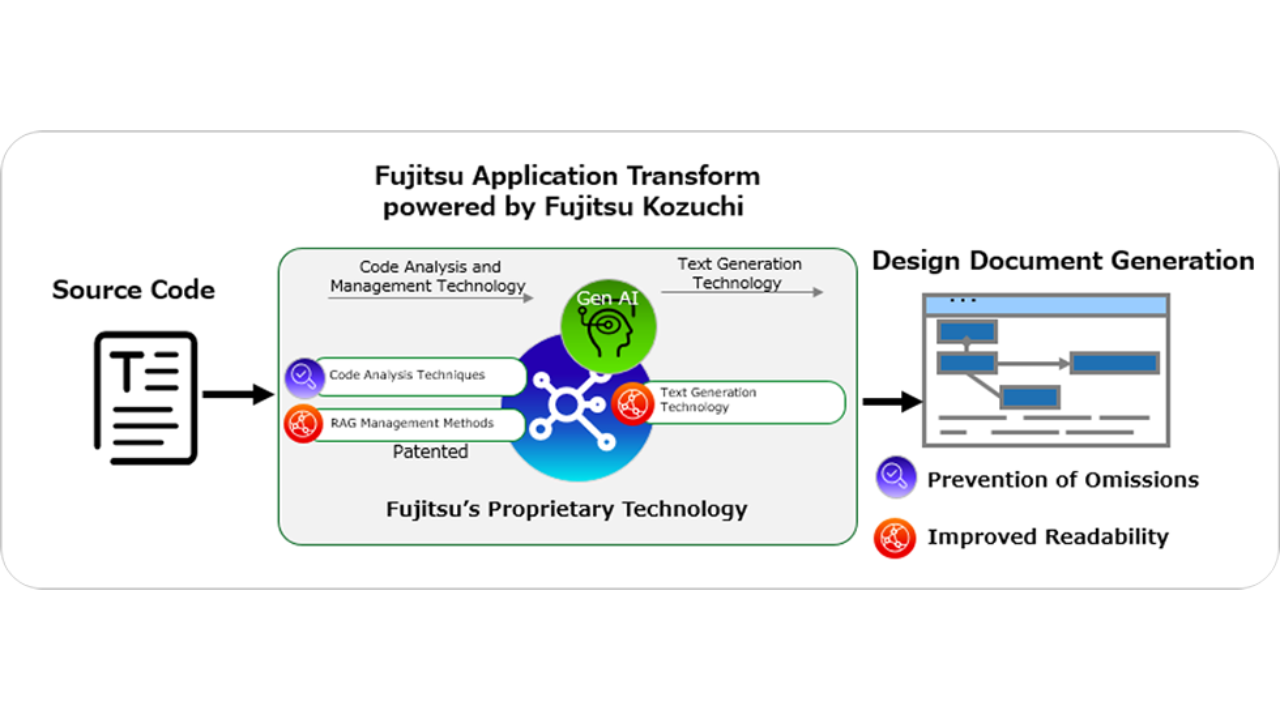
Fujitsu Application Transform is a specialized generative AI service designed to solve the “black box” problem of legacy enterprise systems. Officially launched as a SaaS offering on March 30, 2026, it is powered by Fujitsu Kozuchi, the company’s flagship AI platform. The tool’s primary breakthrough is its ability to ingest massive volumes of complex, archaic source code, specifically COBOL, and automatically generate highly accurate, human-readable design documents.
What sets this apart from general-purpose AI is its use of Knowledge Graph-Enhanced RAG (Retrieval-Augmented Generation). By linking source code to a structured knowledge graph, the system eliminates the “hallucinations” common in other LLMs, achieving a 95% comprehensiveness rate in capturing system logic. For organizations stuck in the “person-month” model of manual reverse-engineering, Fujitsu reports a staggering 97% reduction in work time. While currently focused on analysis, Fujitsu has confirmed that throughout fiscal year 2026, the tool will evolve into a full-lifecycle “AI-Driven Software Development Platform” capable of automatically rewriting code for cloud-native environments.
Features
Automated Design Document Generation
Analyzes existing source code and produces structured documentation, including logic flowcharts and data definitions.
Knowledge Graph-Enhanced RAG
A specialized architecture for software engineering that prevents omissions by cross-referencing code against a structured logic map.
Complex Language Support
Specifically optimized for COBOL and other legacy languages that general AI models often fail to interpret accurately.
Tacit Knowledge Capture
Incorporates unique individual or team knowledge often missing from official documentation.
End-to-End Development Loop
Slated for 2026 rollout, this feature will manage everything from requirements definition to integration testing.
SaaS Delivery Model
Accessible via a secure cloud interface, allowing for rapid deployment across global organizations.
Best Suited for
Financial Institutions
Modernizing core banking systems and ensuring compliance with 2026 medical and financial fee revisions.
Government Agencies
Updating 20+ year-old business software products necessitated by legal and regulatory changes.
Manufacturing Giants
Migrating complex on-premises supply chain logic to hybrid or multi-cloud environments.
IT Managed Service Providers
Accelerating the "reverse-engineering" phase of modernization projects for their clients.
Retail & Healthcare
Rebuilding legacy databases to support modern, AI-driven customer and patient experiences.
Strengths
Massive Productivity Gains
Superior Readability
Hallucination-Free Results
Realistic Modernization Path
Weakness
Regional Rollout
Evolutionary Phase
Getting Started with Fujitsu Application Transform: Step-by-Step Guide
Step 1: Onboard to the SaaS Portal
Sign up for the Fujitsu Application Transform service through the Fujitsu Kozuchi platform.
Step 2: Source Code Ingestion
Upload your legacy system’s source code (e.g., COBOL files). The system uses Fujitsu Knowledge Graph-Enhanced RAG to map the architecture.
Step 3: AI-Driven Analysis
The AI agents autonomously parse the code, identifying business rules, data dependencies, and legacy logic patterns.
Step 4: Generate Design Documents
Review the automatically generated flowcharts and specification sheets. Adjust parameters if expert “tacit knowledge” needs to be manually added.
Step 5: Formulate Modernization Strategy
Use the newly generated documentation to plan your migration to cloud-native platforms, significantly reducing the risk of “missing logic” during a rewrite.
Frequently Asked Questions
Q: How does it prevent AI from making mistakes (hallucinating)?
A: It uses Knowledge Graph-Enhanced RAG, which forces the AI to ground its answers in a pre-verified structure of the system’s actual code and design info.
Q: Can it handle languages other than COBOL?
A: Yes, it supports multiple legacy and modern languages, though its optimization for complex COBOL logic is its standout feature.
Q: Is the documentation it creates actually useful for humans?
A: Fujitsu has improved the readability by 60% over conventional methods, ensuring the output is easy for modern developers to follow.
2026 Roadmap & Pricing
Fujitsu aims to standardize this “AI-driven model” as the global industry standard for software engineering by the end of 2026.
| Feature | Release Timing (FY2026) | Impact |
| Design Document Gen | Launched March 30, 2026 | 97% reduction in documentation workload. |
| Source Code Rebuilding | Q2-Q3 2026 | Automatically refactors legacy code for future-use architectures. |
| Auto Code Rewriting | Q4 2026 | End-to-end modernization from legacy to modern languages. |
| Operation Support | Continuous Rollout | AI-driven maintenance and regulatory update monitoring. |
Pricing Note: As an enterprise SaaS, pricing is typically based on the volume of code (SLOC) and the depth of analysis required..
Share it on social media:
Questions and answers of the customers
There are no questions yet. Be the first to ask a question about this product.