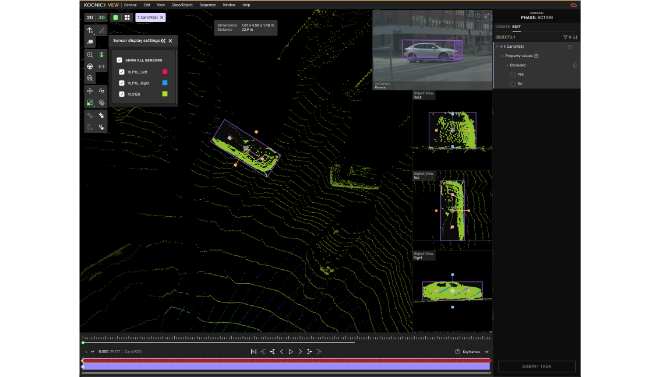
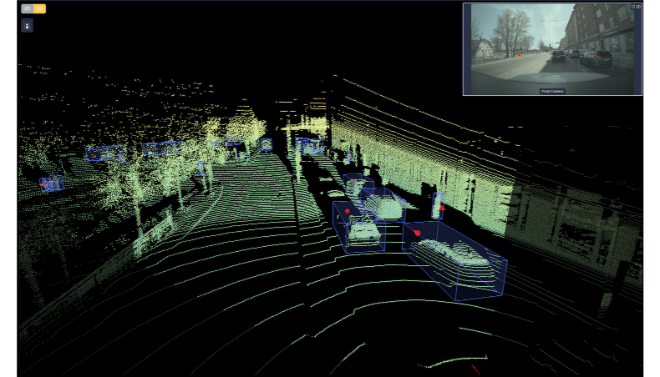


Kognic is a highly specialized, enterprise-grade platform built to solve the data bottleneck for companies developing Autonomous Driving (AD) and Advanced Driver-Assistance Systems (ADAS).
Introduction
Autonomous systems are only as good as the ground truth data they are trained on. For autonomous vehicles, this means dealing with petabytes of complex, multi-modal data captured under rare and challenging edge cases. Kognic was founded to bridge the critical gap between raw fleet data and the refined, trustworthy datasets needed to train robust AI perception models.
Since its founding, Kognic has committed to accelerating perception development by making human feedback more impactful. The platform prioritizes scenario discovery, using AI to find the most valuable, unannotated frames from a data lake, and then streamlines the annotation of that specific data. Kognic’s commitment to ethical sourcing and fair labor for its annotation workforce further solidifies its position as a trusted partner for safety-critical AI development.
Automotive Data
Sensor Fusion
AI Alignment
Enterprise MLOps
Review
Kognic is a highly specialized, enterprise-grade platform built to solve the data bottleneck for companies developing Autonomous Driving (AD) and Advanced Driver-Assistance Systems (ADAS). It moves beyond simple manual data labeling to provide an AI Alignment Platform that manages the entire process of transforming raw, multi-sensor fleet data (from LiDAR, camera, and radar) into high-quality, trustworthy training signals.
The platform’s core strength is its focus on multi-sensor fusion and quality assurance at scale, incorporating features like auto-labels (AI-assisted pre-labeling) and Checker Apps (real-time quality validation). This unique blend of platform, people, and processes is crucial for safety-critical applications like robotics and autonomous vehicles. Kognic is battle-tested by industry giants like Bosch and Continental, making it the premier choice for organizations where data quality is paramount and development scale is massive.
Features
Multi-Sensor Fusion Annotation
Industry-leading tools that enable annotators to merge and label data simultaneously from cameras, LiDAR (point clouds), and radar in a single, coherent view.
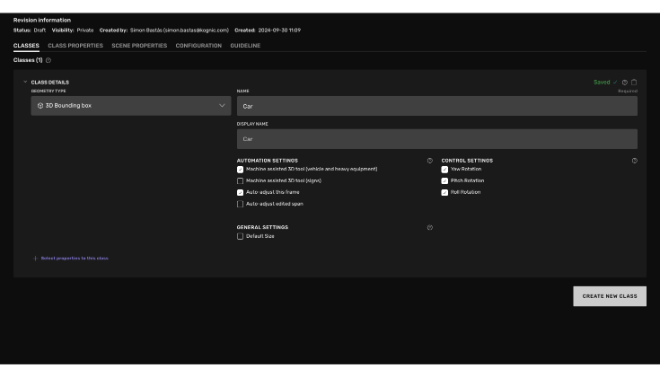
AI Auto-Labels (Co-Pilot Functionality)
Utilizes AI predictions and pre-labeling to automate repetitive tasks, allowing annotators to start with up to $68\%$ of the work already done.
Checker Apps & Quality Assurance
Over $90$ real-time validation checks (Checker Apps) that automatically flag potential annotation issues and geometric inconsistencies before submission.
Scenario Discovery & Curation
Enables developers to use model confidence, uncertainty metrics, or natural language search to identify the most challenging and valuable unannotated frames from their data fleet.
Guided Annotation Workflows
Utilizes automation to direct annotators through an optimized sequence of steps, ensuring process consistency and maximizing throughput.
Composable MLOps Architecture
Offers flexible deployment options (Managed Service, Platform License, Hybrid) and seamless API integration with pre-existing MLOps pipelines and cloud infrastructure.
Best Suited for
Automotive OEMs (Original Equipment Manufacturers)
Essential for major players (like Continental, Bosch) building ADAS and Level 4/5 Autonomous Driving systems.
Robotics and Heavy Industry
Organizations developing perception systems for automated machinery, drones, or complex industrial environments that rely on multi-sensor data.
Computer Vision Engineers
To efficiently define, explore, and refine complex datasets for training perception models at scale.
Data Engineers & Dataset Curators
For managing petabyte-scale data lakes and strategically selecting the most valuable data segments for annotation.
Safety and Validation Teams
To leverage quality assurance tools and data coverage metrics to ensure regulatory compliance and model trustworthiness.
AI Research Teams in Regulated Industries
Any team where high data quality, consistency, and auditable processes are non-negotiable.
Strengths
Unmatched Data Quality
Massive Productivity Gains
Specialized for Autonomy
Flexible Workforce Integration
Weakness
High Cost of Entry
Steep Learning Curve
Getting Started with Kognic: Step by Step Guide
Getting started with Kognic involves establishing data flow and defining annotation rules.
Step 1: Contact Sales and Define Scope
Engage with Kognic’s solution engineers to define the project scope, required sensors (LiDAR/camera), and specific annotation needs.
Step 2: Establish Data Integration
Set up the pipeline to stream raw fleet data from your cloud storage into the Kognic platform, often through cloud bucket integration.
Step 3: Develop Annotation Guidelines
Work with Kognic’s experts to create precise, unambiguous guidelines for the human annotators to ensure consistency and eliminate interpretation errors.
Step 4: Launch a Labeling Request
Define a “Request” by selecting the input data batch and the required workflow (e.g., 3D cuboid tracking). The platform’s AI will pre-label the data.
Step 5: Monitor Quality and Refine
Track the quality metrics in real-time using Checker Apps. Use model feedback (e.g., uncertainty scores) to intelligently prioritize data for further annotation, continuously refining the dataset quality.
Frequently Asked Questions
Q: What is "Sensor Fusion" annotation?
A: Sensor Fusion annotation is the process of labeling data collected simultaneously from multiple sensors (like cameras, LiDAR, and radar) and ensuring the labels are consistent across all views in 2D and 3D space.
Q: Does Kognic provide the annotators, or just the platform?
A: Kognic offers both: a Managed Service (where Kognic provides the expert annotators) and a Platform License (where the customer uses their own internal or external workforce with Kognic’s tools).
Q: What is an "Edge Case" in Kognic's context?
A: An Edge Case is a rare, unusual, or critical scenario (e.g., a complex intersection, a bizarre obstacle, or poor weather condition) that the perception model struggles with. Kognic’s tools help developers find and prioritize these cases for annotation.
Pricing
Kognic does not publicly list fixed pricing; it operates on a model customized to the volume of data, complexity of annotation, and choice of service (Platform license vs. Managed Service).
Model | Pricing Structure | Key Cost Driver |
Managed Service | Quote-based (Per Frame/Per Hour) | Complexity of data (multi-sensor fusion) and required quality level. |
Platform License | Quote-based (Annual Fee + Usage) | Number of users, scale of data processed, and features enabled (e.g., Scenario Discovery). |
Hybrid Solution | Quote-based (Mixed) | Combines the license fee for the platform tools with a separate cost for any outsourced annotation workforce. |
Alternatives
Scale.ai
A major competitor offering a large human-in-the-loop data platform with strong enterprise focus, broad data type support, and a robust API.
Labelbox
An end-to-end training data platform for ML teams, offering tools to create and manage high-quality training data for computer vision and NLP.
SuperAnnotate
A leading platform for building and managing training data, offering a suite of annotation tools and MLOps capabilities, often competing directly on quality and speed.
Share it on social media:
Questions and answers of the customers
There are no questions yet. Be the first to ask a question about this product.