Gemini 4 Hydrogen is Google’s new fast AI model, and since 12 November 2026 it powers Google Search for every user, worldwide, for free. Google calls it the biggest model upgrade Search has ever had. In practice, AI Mode now handles long, messy, multi-part questions and answers with more tables, images and links. For businesses, the search box just got smarter. Your website has to keep up.
Here’s what changed, what it means for your traffic, and three things to do this week.
What happened
Google announced on its official blog that Gemini 4 Hydrogen is now live in Search for all users, globally. The post came from Robby Stein, Google’s VP of Product for Search. He named four upgrades:
- It understands what you mean. Questions with several parts, typos or oddly specific needs now get an answer to each part.
- It searches wider. AI Mode already splits one question into many sub-searches. Google calls this “query fan-out”. Hydrogen does more of it, and Google says that links people to sites they might never have found.
- It shows more. Expect more images, comparison tables and small custom tools inside the answer.
- It works in every AI Mode language. Not just English.
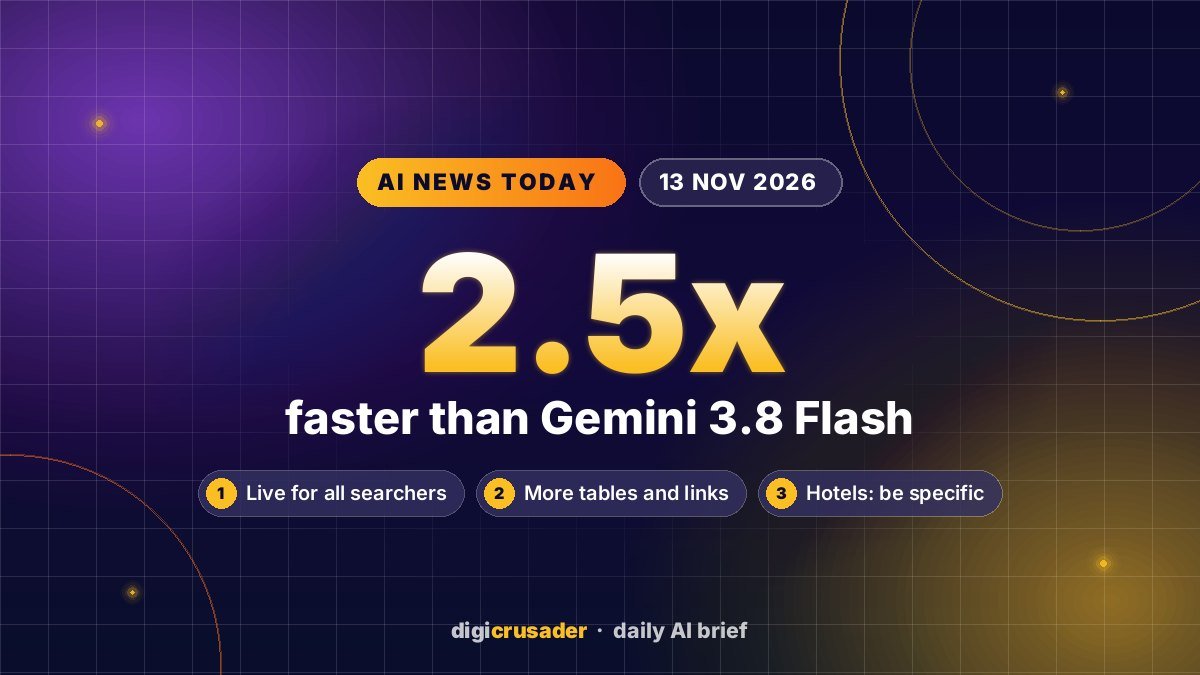
Speed is the headline. TechCrunch reports Google’s claim that Hydrogen completes tasks 2.5 times faster than Gemini 3.8 Flash, the model it replaces. Google also says it beat its bigger sibling, Gemini 4 Argon, on one broad intelligence benchmark. It’s rolling out in the Gemini app and to developers too (Google DeepMind, Ars Technica).
Here’s the part most coverage missed. When Gemini 4 Argon reached AI Mode in October, only paying AI Pro and Ultra subscribers got it. Hydrogen goes to everyone.
Why it matters for your business
Big models make headlines. Fast, cheap models change habits, because they’re the only ones Google can afford to run on every search. This is the AI search your customers will actually use.
Expect three shifts.
1. Searches get longer
When Google copes with a five-part question, people stop dumbing theirs down. “Accounting software” becomes “accounting software for a 20-person agency that bills in two currencies and syncs with our CRM”. One page chasing one broad keyword can’t answer that.
2. Depth beats breadth
Every sub-search is a fresh chance to be cited. A site with clear pages on pricing, integrations, limits and use cases can win four sub-questions. A site with one vague product page wins none.
3. Tables pick the shortlist
When AI Mode builds a comparison table, it uses facts it can read. Prices buried in a PDF? Specs inside an image? You may be missing from the table. Or worse, described wrongly.
One honest caveat. Google says wider fan-out sends people to more websites. That’s a promise, not proof. Google still doesn’t give site owners a separate AI Mode click report. Trust your own numbers.
What it means for travel and hospitality
Few searches pack in more conditions than travel. Try this one: “family hotel near the beach in Goa, under budget, kids’ pool, free cancellation, airport pickup.”
That’s five sub-searches. Hydrogen is built to run all of them.
The hotel that wins is the one whose facts are easy to check. Room types. Real amenities. Cancellation rules. Distance to the beach. Parking, pets, accessibility. A line like “luxury redefined” answers none of it.
Comparison tables raise the stakes. Picture AI Mode lining up five properties side by side. If your amenity list differs between your website, your Google Business Profile and your booking channels, the table may get you wrong. Or drop you.
There’s good news for independents. A small hotel with precise, structured facts can now beat a big brand on a specific question. Clarity wins, not size.
Our take
This matters more than the Argon launch, even though Argon is one of Google’s top frontier models. Argon reached a paying few. Hydrogen reached everyone. Speed plus scale is what changes how people search.
The lesson isn’t “publish more”. It’s “answer sharper questions, with facts a machine can verify”.
Who loses? Sites still building one page per keyword. Who wins? Sites with FAQ-level detail, the same facts everywhere, and nothing blocking Google’s crawlers.
And stay sceptical. More links in an answer doesn’t mean more clicks to you. Measure it.
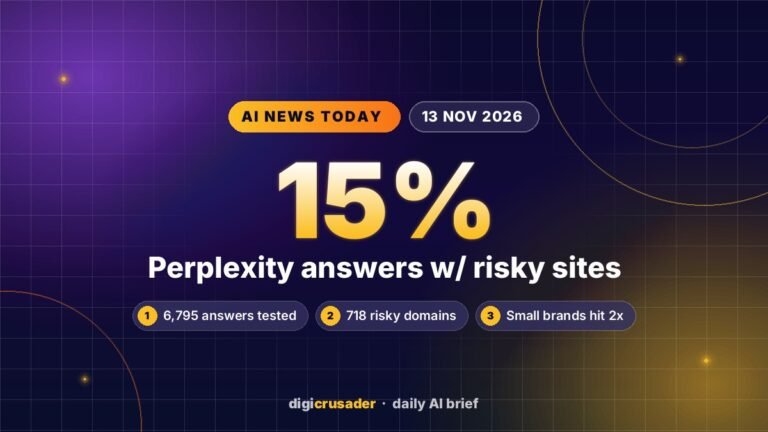
Accuracy matters as much as visibility. A new study found AI chatbots sending shoppers to fake websites, and small brands were hit hardest.
What to do now
- Ask Google the hard question. Type the most detailed question a real customer would ask into AI Mode. Do you appear? For which parts? What does it get wrong? Our free AI visibility audit gives you a baseline score in minutes.
- Free your facts. Move prices, specs, policies and amenities out of PDFs and images into plain text on the page. Add structured data. Keep every detail identical across every channel.
- Open the door. Check that robots.txt and your firewall aren’t blocking Google or other AI crawlers. Our AI crawler checker takes under a minute.
FAQ
What is Gemini 4 Hydrogen?
Gemini 4 Hydrogen is Google’s fast, lower-cost AI model, launched on 12 November 2026. Google says it is 2.5 times faster than Gemini 3.8 Flash, and it now powers Google Search for all users.
Is Gemini 4 Hydrogen free in Google Search?
Yes. Google is rolling it out to all Search users worldwide. That’s different from Gemini 4 Argon, which reached AI Mode only for paid AI Pro and Ultra subscribers.
Will Gemini 4 Hydrogen affect my website traffic?
Possibly, in either direction. Google says wider fan-out links to more sites but hasn’t shared click data, so track Search Console and test how AI Mode describes your business.
Want the bigger picture? Read our latest AI News Today brief or browse all AI news.