Ask ChatGPT, Gemini or Perplexity where to buy a brand, and about one answer in eleven sends you to a fake, counterfeit or dead website. That’s the finding of a new study of 6,795 chatbot answers. Small brands were hit about twice as often as big ones. If your customers find you through AI, a scammer can now stand between you and them, inside the answer itself.
Here’s what the study found, why it matters even if you don’t sell sneakers, and three fixes that take an afternoon.
What happened
On 12 November, The Verge reported on research by Podqi, a firm that sells brand-protection services. Podqi asked the free versions of ChatGPT, Gemini and Perplexity where to buy products from 151 brands. Which shops stock them? Is there an official store in my country? Testing ran in two rounds in September.
The numbers, as summarised by Startup Fortune and Gadget Review:
- About 9% of all answers exposed the shopper to a risky site.
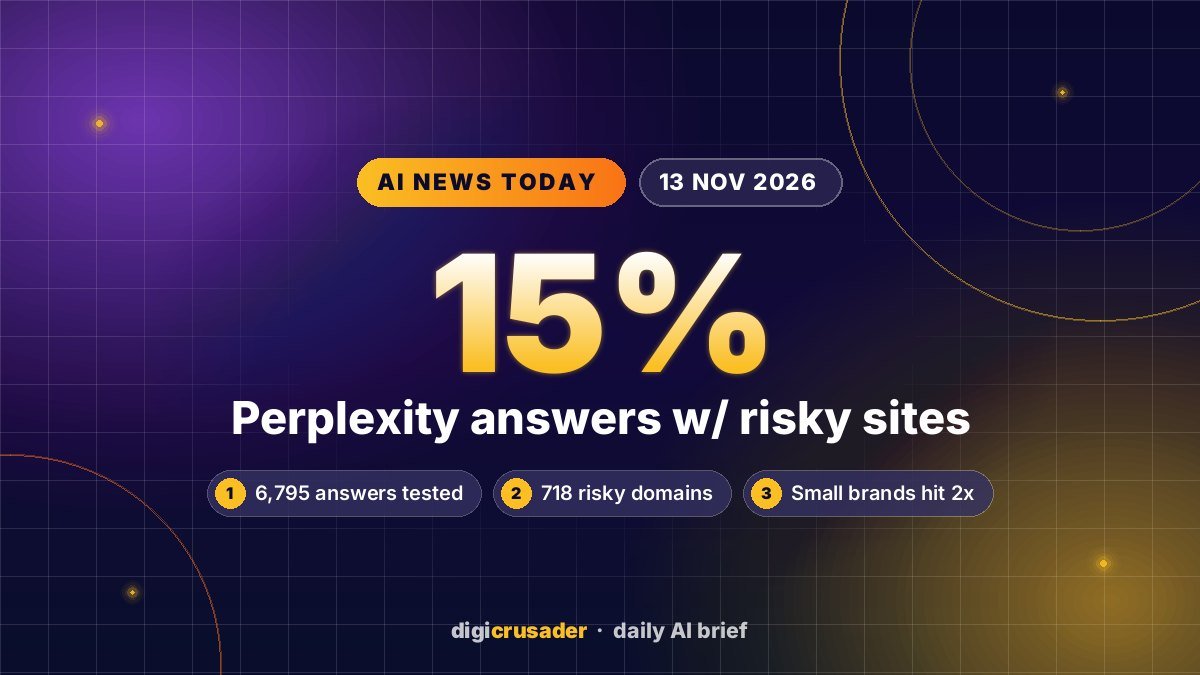
- Perplexity: 15%. ChatGPT: 8%. Gemini: 4%.
- Of 4,437 domains checked, 718 were flagged. 351 were fake. 367 were dead.
- “Is there a regional store?” was the riskiest question type, at 16%.
- Smaller brands faced roughly double the exposure of big names.
- ChatGPT warned users only 24% of the time it showed a risky site. The others rarely warned at all.
The bad links came in a few flavours. Lookalike stores. Counterfeit sellers. Old brand domains that someone else had bought. In some cases, a chatbot invented a regional store for a brand that doesn’t have one.
Google pointed out that Gemini scored best. OpenAI said it’s building stronger defences against deceptive shopping sites.
One caveat matters. The study measured exposure to risky links, not actual fraud. Nobody tracked whether shoppers lost money.
Why it matters for your business
Brand protection used to mean watching search ads and marketplaces. Now there’s a new channel. And here, a fake store gets recommended in the calm, confident voice of a trusted assistant, usually with no warning.
That channel is growing fast. Google has just made Gemini 4 Hydrogen the default for every Google search.
A risky AI answer is worse than a dodgy search result, for three reasons.
1. Trust carries over
When a chatbot says “here’s the official store”, people believe it. They assume the assistant checked. It didn’t.
2. Gaps get filled
No official site for a country? No page listing your real sellers? The AI fills the gap with whatever it finds. Scammers know this, and they build for it.
3. Old domains come back to bite
Let a domain lapse after a rebrand and anyone can buy it. AI tools may still treat it as yours.
And timing makes it worse. AI shopping agents that browse and buy for you are arriving now. Take away the human, and you take away the last person who might have noticed something felt off.
What it means for travel and hospitality
Podqi tested retail brands, not hotels. But the pattern fits travel almost too well. Fake booking sites and impostor call centres are already an old problem.
Look at the study’s risk factors again. Small brands. Missing or patchy regional sites. Domains changed after a rebrand. That’s a fair description of thousands of independent hotels and groups.
And the cost is higher. A fake sneaker shop loses someone a pair of shoes. A fake hotel site takes a deposit, leaves a family with no room on arrival, and earns a furious one-star review that names the real hotel.
Our take
Expect the exact numbers to be argued over. Podqi sells brand protection and wrote its own prompts. Hold the percentages loosely.
The direction isn’t in doubt. AI assistants are now a sales channel. Every sales channel gets gamed. The difference is that almost nobody is watching this one.
The fix isn’t a shiny new tool. It’s boring hygiene, done properly. One official domain. A public list of where you really sell. A monthly check of what AI says about you. The small brands most at risk can do all of it in an afternoon.
What to do now
- Ask the chatbots where to buy you. Try ChatGPT, Gemini and Perplexity. Ask where to buy or book your brand, including in your key countries. Note every wrong or unfamiliar link. Then run our free AI visibility audit to see how AI reads your site.
- Publish the truth, plainly. Create one page listing your official domains, regional sites and authorised sellers or booking channels. Link it from your footer. Keep the same details on your Google Business Profile and every channel.
- Guard your domains. Renew old and regional domains instead of letting them lapse. Register obvious lookalikes. Report impostors to the AI providers and the domain registrar.
FAQ
Do AI chatbots recommend fake websites?
Sometimes. In Podqi’s test of 6,795 shopping answers, about 9% exposed users to a risky site: 15% for Perplexity, 8% for ChatGPT and 4% for Gemini.
Which AI chatbot is safest for shopping?
Gemini had the lowest rate of risky links in this study, and ChatGPT warned users most often. None was risk-free, so check any store link before you pay.
How can a brand stop AI chatbots sending customers to fake sites?
Publish a clear list of your official domains and sellers, keep your facts consistent everywhere, protect old domains, and check regularly what AI assistants say about you.
Want the bigger picture? Read our latest AI News Today brief or browse all AI news.